

“Linguistic revision is work done on a text in order to improve it.” (Office québécois de la langue française)
Website, newsletter, service proposal, annual report: your texts speak for you, often before you have even met your customers. A mistake, a confusing sentence or an awkward tone can be enough to undermine trust. That is where linguistic revision comes in.
Here is what it involves, why it is worth the investment and what a reviser’s work actually looks like. Note: our revision service is offered for texts written in French, so the examples below are in French, with English explanations.
Proofreading or revision: what is the difference?
The two are often confused, but they do not go as far:
- Proofreading targets errors: spelling, grammar, punctuation, typography.
- Revision goes further. In addition to correcting, the reviser makes sure the text is clear, consistent, fluent and suited to its audience. They may rephrase sentences, reorganize paragraphs or flag ambiguous passages.
Software such as Antidote is an excellent tool for spotting errors in French (see how to improve your texts with Antidote), but it does not replace a professional’s judgment on meaning and tone.
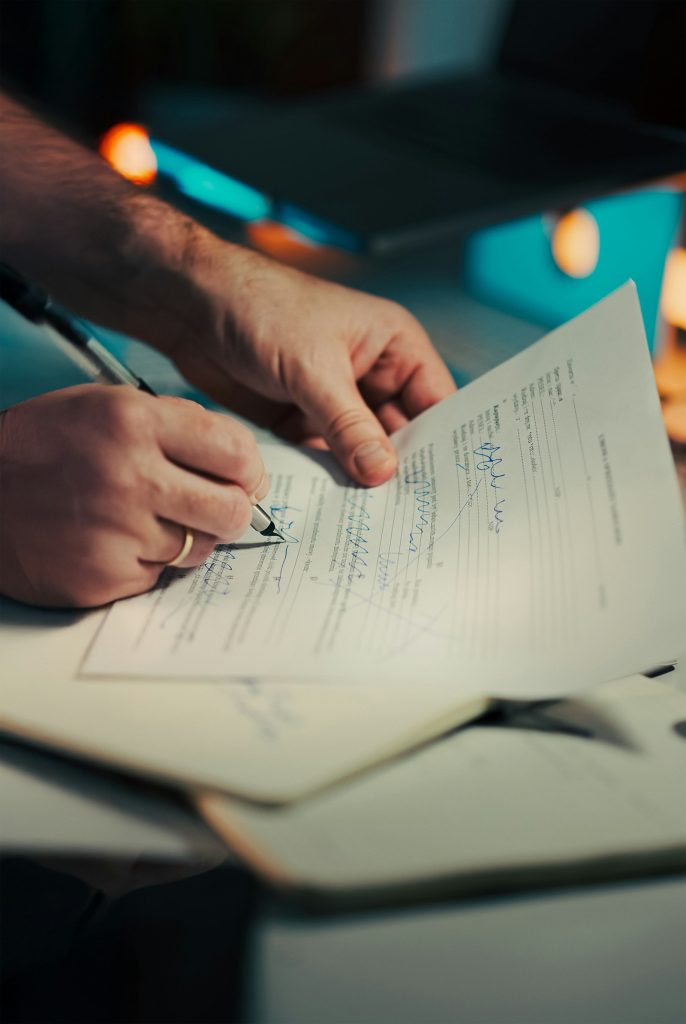
6 good reasons to have your texts revised
1. Understanding
The reviser puts themselves in your readers’ shoes. They spot passages that seem obvious to you because you know your subject, but that are not obvious to someone discovering it.
2. Expertise
Revision is a profession. It requires in-depth knowledge of grammar, typography and French usage, as well as mastery of reference works. The reviser also knows when a rule leaves room for choice.
3. Distance
After writing and rereading a text several times, you no longer see your own mistakes: the brain reads what it expects to read. A fresh pair of eyes quickly spots missing words, repetitions and inconsistencies.
4. Style
The reviser makes the text flow better: they avoid repetition, lighten sentences that are too long and choose the right word. Your message gains in clarity and effectiveness.
5. Consistency
A professional text must be uniform from start to finish: the same way of writing numbers, dates, job titles and product names. These details, multiplied over several pages, make all the difference in the image you project.
6. Respecting your intentions
A good reviser improves your text without distorting it. They respect your style and your message, and explain their suggestions when they affect the substance.
What does a revision look like? A few examples
Here are typical examples of what a reviser can improve.
A heavy sentence:
- Before: « En lien avec la réunion qui a eu lieu hier, nous désirons vous faire parvenir le document ayant fait l’objet de discussions lors de celle-ci. » (a long, wordy way of saying the same thing)
- After: « Voici le document dont nous avons discuté à la réunion d’hier. » (“Here is the document we discussed at yesterday’s meeting.”)
An ambiguity:
- Before: « Le technicien a parlé au client de son problème. » (Whose problem: the technician’s or the client’s?)
- After: « Le client a expliqué son problème au technicien. » (“The client explained his problem to the technician.”)
An anglicism:
- Before: « Nous allons céduler une rencontre pour adresser la question. » (“céduler” and “adresser” are calques of “schedule” and “address”)
- After: « Nous allons planifier une rencontre pour traiter la question. » (the standard French verbs)
Taken separately, these changes seem minor. Together, they make a text more professional and more pleasant to read.

The most common errors
Some errors come up in almost every text we revise:
- Agreement: past participles, agreement across a distance (« les documents que vous nous avez fait parvenir »).
- Punctuation: missing or extra commas, incorrect spacing around punctuation marks.
- Capital letters: in titles, organization names, days and months (which are lowercase in French).
- Anglicisms: « céduler », « adresser un problème », « en charge de », « faire du sens ».
- Inconsistencies: the same term written two different ways, dates presented differently from one page to the next.
These errors often go unnoticed by the author, but not by your readers.
Which texts should be revised?
All public or important texts benefit from revision, including:
- your website pages and blog posts;
- your service proposals, quotes and presentations;
- your newsletters and social media posts;
- your official documents: policies, guides, reports, standard contracts.
The more people will read a text, or the longer it will stay in circulation, the more worthwhile revision becomes.
How to prepare a text for revision
To get the most out of a revision:
- Finish your text before sending it: revising a draft that will still change costs more.
- Specify the target audience and the desired tone (formal, friendly, technical).
- State your preferences: gender-inclusive writing, company-specific terms, in-house style guide.
- Allow enough time: a good revision is not done at the last minute.
If you write your texts yourself, our simple writing method will help you get off to a good start.
In summary
Having your texts revised ensures they are error-free, clear, consistent and true to your message. It is a modest investment compared with the image they project to your customers and partners.
Have a French text to revise? Our professional writing and editing service (offered in French) takes care of your documents, web pages and communications. Contact us.



0 Comments